



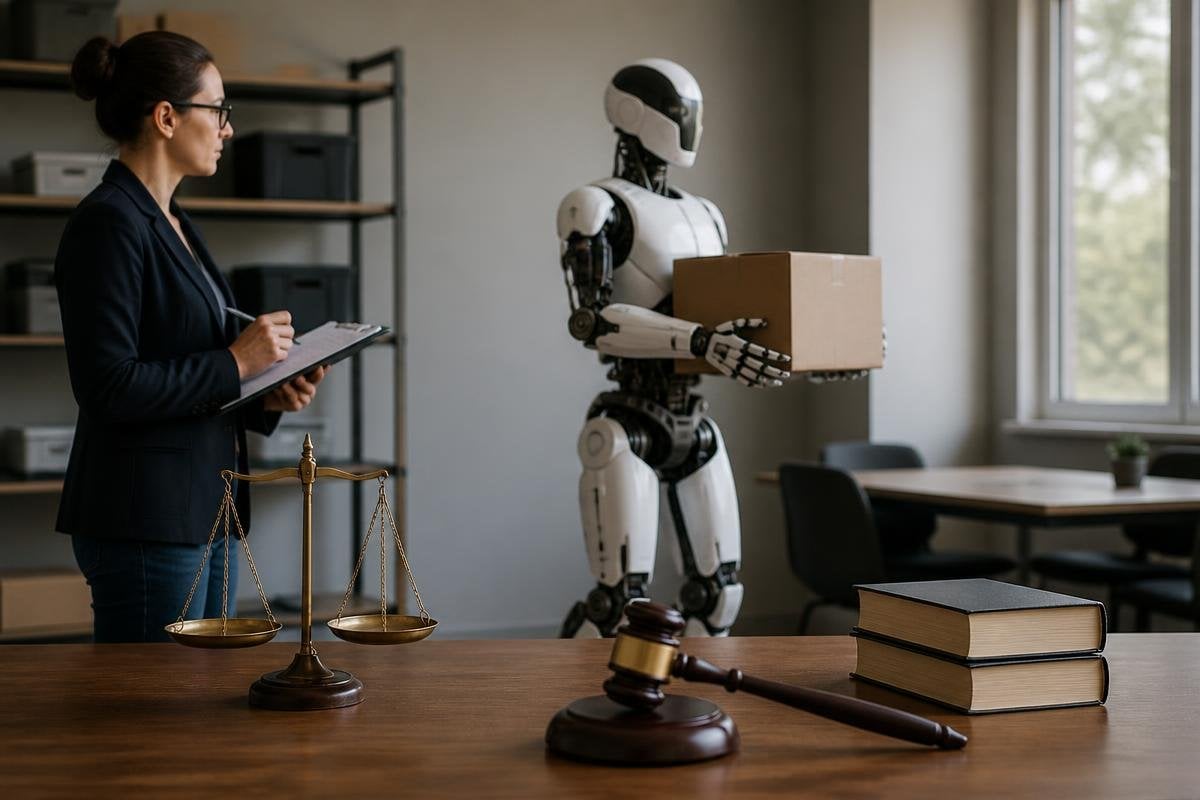
A humanoid robot can lift a box, record a room, make a decision, or hurt someone. Those actions raise different legal questions, so one law based only on a robot’s shape would miss the real risks.
Quick read
- Rules should follow the task, the level of control, and the harm that can result.
- Owners and operators need clear duties before humanoid robots work near people.
- The hardest open issue is responsibility when software, hardware, and human commands all affect one action.
Start with the task
A robot’s body tells you less than its job. A machine that carries parcels inside a fenced site creates a different risk from one that enters homes, records conversations, or helps care for a child.
That distinction should guide new rules. A law for physical safety could cover force limits, emergency stops, safe shutdowns, and access around moving joints. A privacy rule would need to cover cameras, microphones, stored data, and remote access. These duties could apply to many kinds of robots, including machines that do not look human.
The same approach also avoids a problem with naming. If lawmakers define a “humanoid robot” by its head, arms, or number of legs, companies could change the design and avoid the rule. A task-based law would still apply when the machine performs the same work with wheels, tracks, or a different body.
Who carries the duty?
A humanoid robot may be built by one company, fitted with software from another, sold by a distributor, and controlled by a customer. When something goes wrong, the person using it may not know which part caused the failure.
A workable system needs a clear chain of duties. The maker should document known limits and safety controls. The software supplier should state what the system can and cannot decide. The owner should set the work area, train staff, and keep records of faults. The operator should have a way to stop the robot without standing in its path.
These duties should match control. A company that changes the robot’s task, connects new tools, or removes a safety limit may take on duties that were not part of the original sale. A rule that assigns all blame to the maker would ignore those changes.
When a humanoid robot works near people, its cameras, microphones, and moving limbs make legal duties concrete. Reporting on humanoid robot policy can tie those duties to named machines and tasks before the discussion turns to privacy and human contact.
Privacy and human contact
A robot working near people can collect more than movement data. Its sensors may record faces, voices, room layouts, and patterns of daily activity. A rule for these machines should state what data the robot may collect, why it needs that data, how long it can keep it, and who can view it.
Physical contact needs its own limits. A machine that hands over a tool has a narrow task. One that touches a person, moves furniture around them, or operates near a patient needs a higher level of testing and supervision.
Consent also gets harder when a robot works in a public place. A person may not know when a camera is active or where the recording goes. Clear signs, visible status lights, and a quick way to ask for deletion could help, but each measure needs a defined duty behind it.
What a useful law would require
The law should set results that people can check, rather than prescribe one robot design. Before a humanoid robot starts work, the responsible company or owner should be able to show:
- A named operator: one person or team has authority to stop the system.
- A task boundary: the robot has a written list of allowed work and forbidden actions.
- A fault record: failures, near misses, software changes, and repairs are logged.
- A data plan: the owner knows what sensors collect and when the records are deleted.
- A public explanation: people near the robot can learn who runs it and how to report harm.
This checklist would also give smaller companies a workable starting point. They could use the same duties for a warehouse pilot, a research lab, or a service robot in a public building, then add stricter controls when the task involves vulnerable people or heavy loads.
The rule should change with the evidence
New laws need a review date. Robot abilities, software updates, and work settings can change faster than a fixed definition. A review process could use accident records, inspection results, and reports from operators to adjust the rules.
I’d support new laws for humanoid robots when they focus on safety, privacy, control, and responsibility. I’d skip a law that treats a human-shaped body as the main legal category.
The next test is practical: can an operator, a company, and an injured person each identify their duties after one robot action goes wrong? If the answer is no, the law still needs work.
